
The ground collector
A closed-loop system uses pipework buried horizontally in trenches or vertically in boreholes. A water-and-glycol mixture circulates through the loop and absorbs heat from the surrounding ground. The exact design depends on the site, ground conditions and heating demand.
How heat is transferred into the home
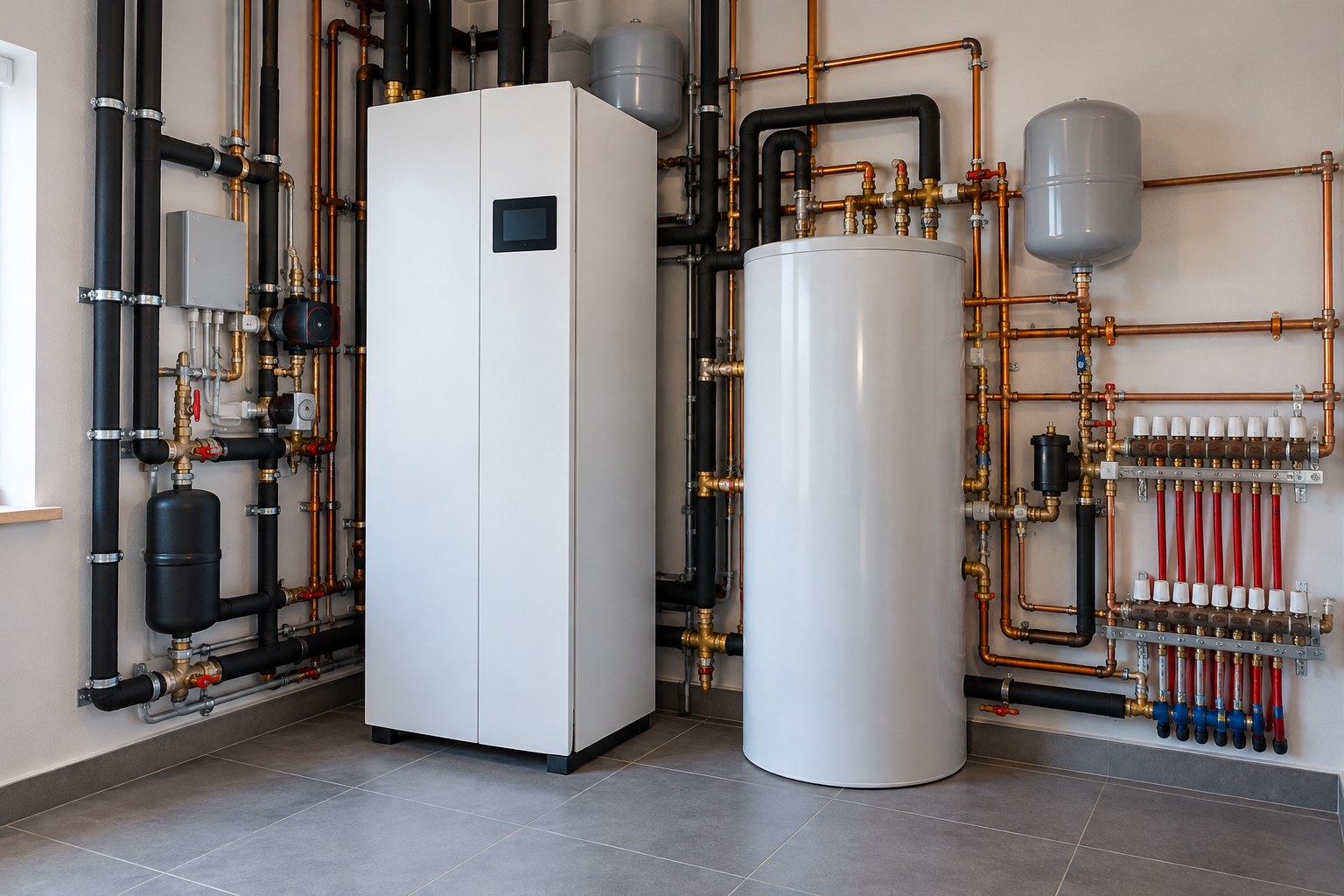
Inside the heat pump, the refrigeration cycle raises the temperature of the collected energy. Heat is then transferred into the building’s heating circuit and, where designed, domestic hot water.
Ground source compared with air source
Ground temperatures are generally more stable than outdoor air temperatures over the heating season, but ground source systems need a suitable collector field or borehole. Installation layout, collector condition, flow rates and the heat pump’s settings all influence performance.
Checks and maintenance
A service may include inspecting accessible components, checking system pressures and operating temperatures, reviewing controls and checking the ground-loop circuit where the equipment and test points allow. Glycol concentration should be checked using an appropriate method and compared with the system and manufacturer requirements.
Possible signs of a problem
Repeated low-pressure alarms, poor flow, unusual temperature differences, air in the circuit or reduced heating performance should be investigated rather than repeatedly reset.
Element can assess the accessible heating and heat-pump components of ground source systems and explain any issues found.