
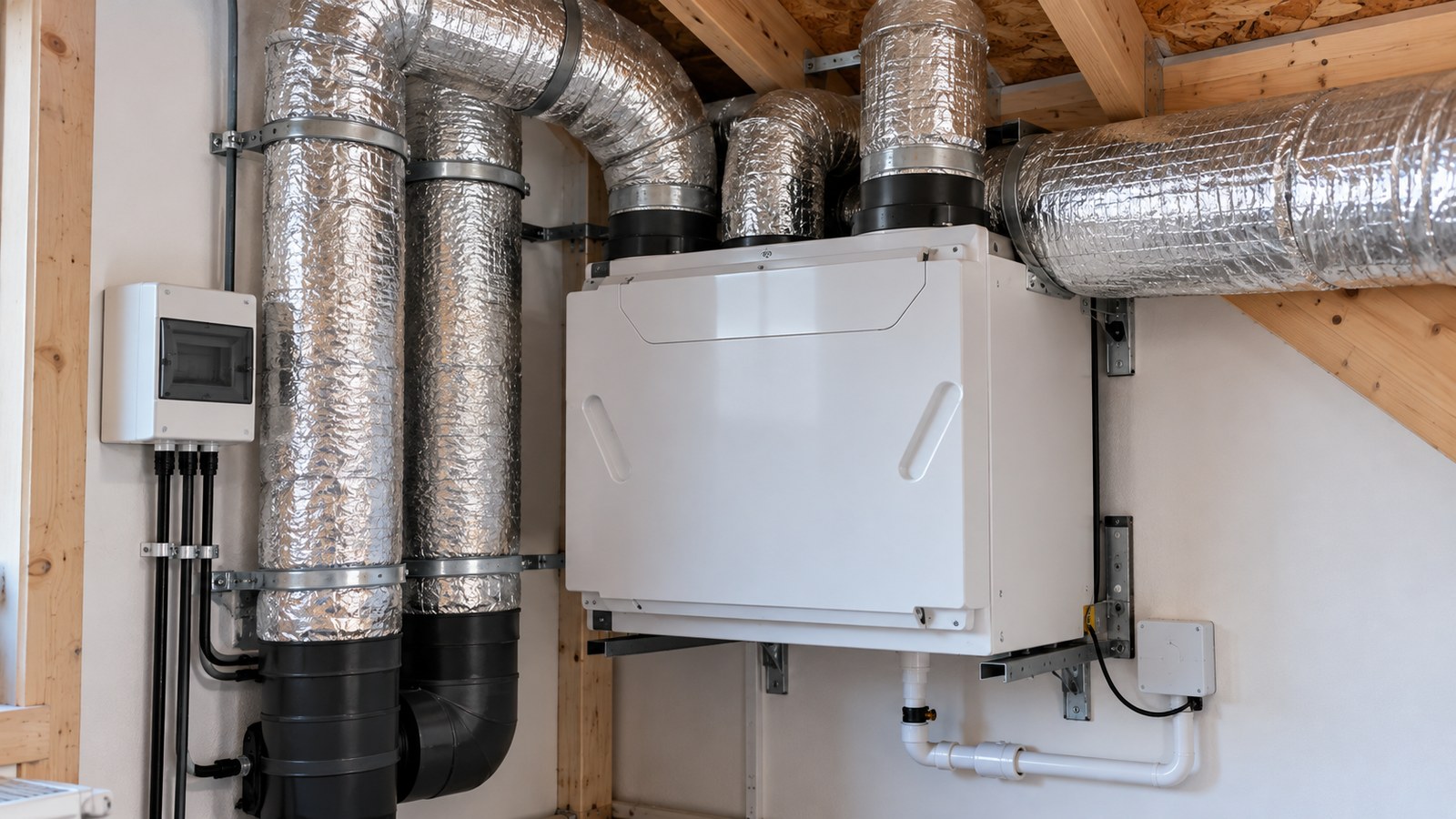
How an MVHR system works
Two fans move air through separate supply and extract ductwork. Stale air passes through one side of the heat exchanger and fresh outdoor air passes through the other. Heat is transferred between the air streams, reducing heat lost through ventilation. Filters help limit dust entering the system and protect the unit.
Where air is supplied and extracted
Fresh air is normally supplied to habitable rooms such as bedrooms and living rooms. Extract air is usually taken from wet rooms such as bathrooms, kitchens and utility rooms. The layout and air volumes should be designed for the property and commissioned correctly.
MVHR is not the same as an exhaust air heat pump
An MVHR system primarily provides balanced ventilation and heat recovery. An exhaust air heat pump uses heat recovered from extracted air as a heat source for a heat-pump cycle and can contribute to heating and hot water. Some appliances combine functions, so the model and system design matter.
Why filters and airflow matter
Blocked or incorrectly fitted filters can restrict airflow and affect performance. Ductwork condition, condensate drainage, fan operation, settings and airflow balance can also matter. Filter intervals depend on the equipment, property and manufacturer guidance.
What a service may cover
Depending on access and model, checks may include the unit, filters, controls, fan operation, accessible duct connections and condensate arrangements. Airflow measurement and balancing may require suitable equipment and should be assessed against the system’s design.
If your MVHR unit is noisy, airflow feels weak, filters clog quickly or condensation concerns develop, contact Element to discuss a service or diagnostic visit.